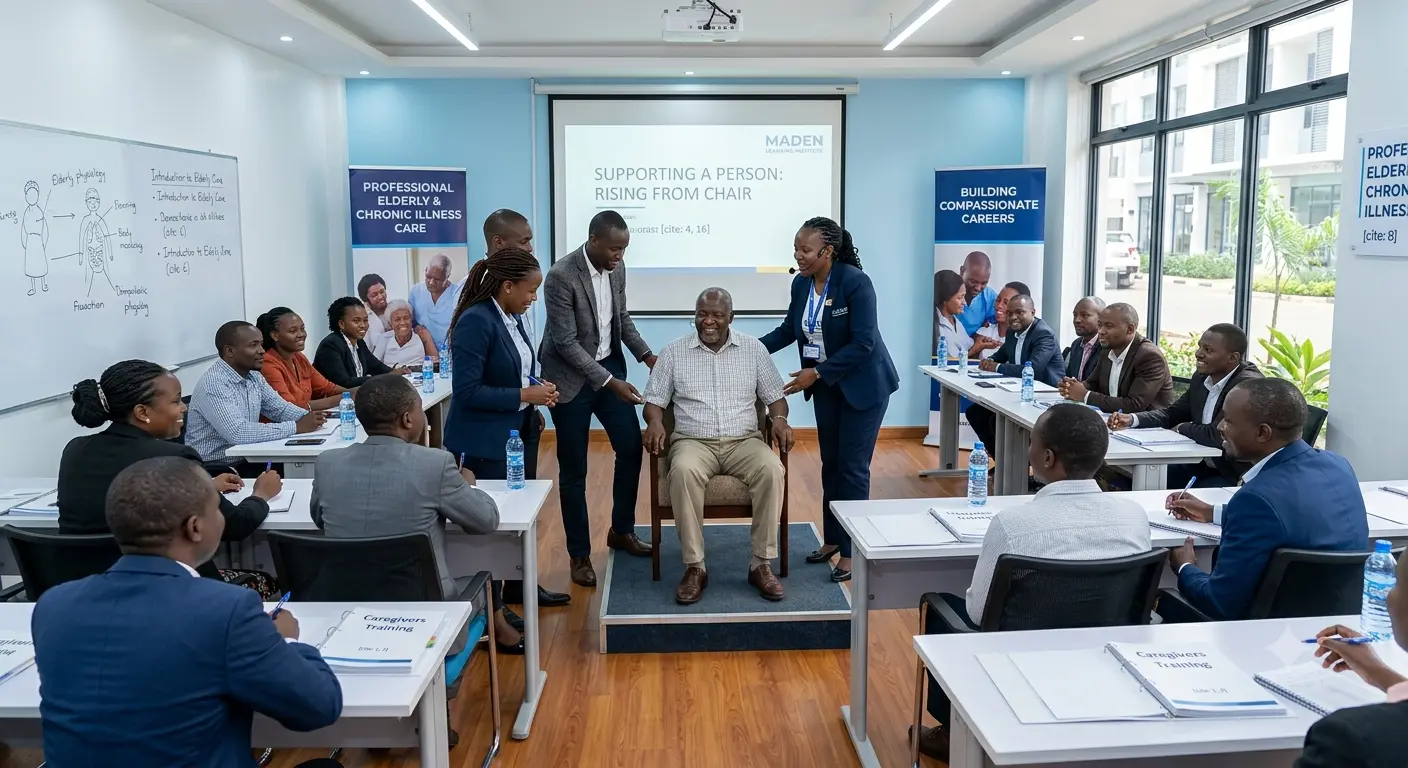
Caregivers Training for Elderly & Chronic Illness Care

Caregivers Training for Elderly & Chronic Illness Care

A comprehensive 5-day programme equipping caregivers
with the knowledge, practical skills, and hands-on
experience to provide compassionate, effective care to
elderly individuals and those living with chronic illnesses.

📅 Duration
5 Days · 15 Sessions
 
🎓 Credential
Certificate of Completion
 
🧪 Training Style
Theory + Hands-On Practicals
 
📍 Provider
Maden Training Institute, Kenya

This programme blends theoretical knowledge with practical skills and real-world simulations —ensuring caregivers are fully prepared to support elderly individuals and people living with chronic illnesses such as diabetes, heart disease, dementia, arthritis, and cancer, with dignity, safety, and
compassion. The final session’s emphasis on caregiver self-care reflects our deep understanding of the demands of this vital role.

🏅 Certified on completion

5 - D AY P R O G R A M M E - Full Curriculum

Each day is structured around focused sessions combining theory with hands-on
practical exercises. Click a day to explore its sessions.

Day1

Introduction to Elderly Care

Foundations of caregiving, communication, and safety awareness

Session 1
Understanding Elderly & Chronic Illness Care
  • Introduction to the training programme and certification process
  • Importance of elderly care and the role of caregivers
  • Understanding the aging process and its impact on physical and mental health
  • Overview of chronic illness: what it means and how it differs from acute illness
  • The caregiver’s role when supporting individuals with long-term conditions
  • Professional ethics, confidentiality, and dignity in caregiving

Session 2
Communicating with Elderly Individuals
  • Effective communication strategies for caregivers
  • Understanding the challenges of communication with elderly individuals
  • Techniques for active listening and empathy
🧪 Practical

Role-playing scenarios where participants practise communication techniques with simulated elderly individuals.


Session 3
Safety and Fall Prevention
  • Identifying common hazards in the environment
  • Strategies for fall prevention and creating a safe living space
  • Techniques for assisting elderly individuals with mobility
🧪 Practical

Home safety assessment walkthrough where participants identify hazards and suggest remedies.

Day2

Personal Care and Hygiene

Hands-on techniques for daily personal care with dignity and respect

Session 1
Bathing and Personal Hygiene
  • Techniques for assisting with bathing, grooming, and dressing
  • Maintaining dignity and respect during personal care activities
  • Addressing common concerns related to hygiene
🧪 Practical

Demonstration and hands-on practice of proper bathing and grooming techniques using manikins or simulated scenarios.


Session 2
Incontinence Care
  • Understanding incontinence and its management
  • Techniques for changing adult diapers and maintaining skin integrity
  • Supporting elderly individuals with incontinence issues
🧪 Practical

Participants practise changing adult diapers using appropriate techniques on manikins.


Session 3
Nutrition and Meal Assistance
  • Importance of nutrition for elderly individuals
  • Strategies for meal planning and preparation
  • Techniques for assisting with feeding and ensuring adequate hydration
🧪 Practical

Meal preparation and feeding exercise where participants create nutritious meals and practise feeding techniques.

Day3

Health Monitoring, Medication & Chronic Illness Care

Clinical skills for monitoring health, managing medications, and supporting individuals with long-term conditions

Session 1
Vital Signs Monitoring & Health Deterioration
  • Importance of monitoring vital signs in elderly and chronically ill individuals
  • Techniques for measuring blood pressure, pulse, temperature, and respiratory rate
  • Recognising signs of health deterioration and when to escalate concern
  • Keeping accurate care records and reporting changes to healthcare professionals
  • Using basic monitoring equipment: thermometers, pulse oximeters, blood glucose meters
🧪 Practical

Participants practise taking vital signs measurements on each other, interpreting readings, and documenting findings using a sample care record sheet.


Session 2
Medication Administration & Adherence
  • Understanding medication regimes and dosages for elderly and chronically ill patients
  • Techniques for administering oral medications, eye drops, and topical treatments
  • Importance of medication adherence, timing, and safety precautions
  • Managing polypharmacy — the challenges of multiple medications
  • Recognising side effects and adverse reactions; when to seek medical advice
🧪 Practical

Simulation exercise where participants practise administering medications using mock medications, pill organisers, and syringes under instructor supervision.


Session 3
Caring for People with Chronic Illnesses
  • Understanding common chronic conditions: diabetes, hypertension, heart disease, COPD, arthritis, kidney disease, and cancer
  • Condition-specific care needs — diet, mobility, medication, and monitoring requirements
  • Managing diabetes: blood glucose monitoring, insulin awareness, hypo- and hyperglycaemia response
  • Supporting individuals with heart disease and respiratory conditions — activity limits, oxygen therapy awareness
  • Caring for people with arthritis and limited mobility — pain management support, assistive devices
  • Recognising medical emergencies in chronically ill individuals: stroke, cardiac events, diabetic crises
  • First aid interventions and when to call for professional help
🧪 Practical

Scenario-based simulations: participants respond to three chronic illness emergencies (a diabetic hypoglycaemic episode, a suspected stroke, and a COPD breathing crisis) and practise appropriate first aid interventions.

Day4

Emotional Support and End-of-Life Care

Providing compassionate care for the emotional and end-of-life needs of elderly individuals

Session 1
Emotional Support for Elderly & Chronically Ill Individuals
  • Understanding the emotional needs of elderly individuals and those with chronic illness
  • The psychological impact of living with a long-term condition — grief, loss of independence, anxiety
  • Techniques for providing companionship, validation, and emotional support
  • Recognising signs of depression, anxiety, and loneliness in care recipients
  • Supporting individuals with dementia and cognitive decline — communication strategies and managing behavioural changes
🧪 Practical

Role-playing exercises: participants practise providing emotional support to simulated individuals — one with depression from chronic pain, and one with early-stage dementia showing confusion and agitation.


Session 2
Palliative, Hospice & Long-Term Condition Care
  • Understanding palliative and hospice care principles
  • Techniques for providing comfort and pain management in end-of-life and chronic illness settings
  • The difference between curative, palliative, and supportive care goals
  • Supporting families and caregivers during end-of-life care
  • Advance care planning — understanding care plans, DNR orders, and patient wishes
🧪 Practical

Simulation exercise where participants practise providing comfort measures and communicating sensitively with a simulated terminally ill individual and their family member.


Session 3
Self-Care for Caregivers
  • Importance of self-care for caregivers
  • Techniques for managing stress and preventing burnout
  • Accessing support resources and community services
🧪 Practical

Relaxation and stress-management workshop covering deep breathing exercises and mindfulness techniques.

Day5

Practical Application, Review & Certification

Integration of all skills, final assessment, and certificate presentation

Session 1
Hands-On Caregiving Skills Workshop
  • Hands-on practice sessions covering various caregiving tasks and techniques
  • Individualised feedback and guidance from instructors
🧪 Practical

Stations set up for participants to rotate through and practise specific caregiving skills learned throughout the programme.


Session 2
Case Studies and Role-Playing Scenarios
  • Interactive case studies and role-playing exercises simulating real-life caregiving situations
  • Application of learned skills and problem-solving
🧪 Practical

Group-based role-playing scenarios where participants apply their knowledge and skills to address complex caregiving challenges.


Session 3 · Final
Certification Examination and Conclusion
  • Written examination to assess participants’ understanding of caregiving concepts
  • Certificate presentation to successful participants
  • Final remarks, evaluation, and feedback collection
🏅 Final Assessment

Participants demonstrate key skills learned during the training programme in a final practical assessment.

WHAT YOU WILL GAIN

Learning Outcomes

By the end of this programme, participants will be equipped with the following competencies:

🤝

Compassionate Communication

Master active listening, empathy, and communication strategies tailored for elderly individuals and those living with chronic conditions.

🛡️

Safety & Fall Prevention

Identify environmental hazards, implement fall prevention measures, and safely assist with mobility for elderly and chronically ill individuals.

🧼

Personal Care Proficiency

Provide dignified assistance with bathing, grooming, incontinence management, and nutrition tailored to individual care needs.

💊

Health Monitoring Skills

Monitor vital signs, manage medications safely, use basic monitoring equipment, and recognise signs of health deterioration.

🩺

Chronic Illness Care

We boasts state-of-the-art training facilities equipped with modern computers, high-speed internet, and collaborative workspaces. Our labs provide a simulated industry environment, enhancing the learning experience for our students.

🧠

Dementia & Cognitive Care

We boasts state-of-the-art training facilities equipped with modern computers, high-speed internet, and collaborative workspaces. Our labs provide a simulated industry environment, enhancing the learning experience for our students.

💙

Emotional & End-of-Life Care

Our team of certified and experienced instructors bring a wealth of industry knowledge to the classroom. They are dedicated to fostering a supportive and engaging learning environment.

🌿

Caregiver Self-Care

MADEN collaborates with leading  industry partners to stay abreast of the latest trends and caregiving training. This enables us to update our course content regularly, ensuring our students receive training that aligns with current industry standards.

Who Should Attend

Is This Programme Right for You?

This programme is ideal for anyone involved in or entering the field of elderly care or care for individuals with chronic illnesses.

✓ Family members caring for an elderly relative at home
✓ Caregivers supporting individuals with chronic conditions (diabetes, cancer, heart disease, COPD, dementia)
✓ Professional caregivers seeking to formalise their skills
✓ Nurses and healthcare assistants expanding their competencies
✓ Domestic workers employed in elderly or long-term care settings
✓ Volunteers supporting elderly or chronically ill individuals in the community
✓ Individuals pursuing a career in geriatric, palliative, or chronic illness care
No prior medical qualification required

This programme is accessible to beginners and seasoned caregivers alike. Whether you are supporting an elderly parent, caring for a family member with a chronic illness, or building a professional caregiving career — all you need is a commitment to compassionate, dignified care.

Common Questions

Frequently Asked Questions

How long is the programme?

The programme runs over 5 full days, with 3 sessions per day — covering theory, demonstrations, and hands-on practical exercises throughout.

Do I need any prior qualifications to enrol?

No prior medical or nursing qualifications are required. The programme is designed for both beginners and experienced caregivers looking to build or formalise their skills.

Does the programme cover chronic illness care?

Yes. Day 3 includes a dedicated session on caring for individuals with chronic conditions including diabetes, hypertension, heart disease, COPD, arthritis, kidney disease, and cancer. It covers condition-specific care needs, medication management, monitoring, and emergency response for each condition.

Is dementia care included?

Yes. Day 4 includes content on supporting individuals with dementia and cognitive decline — including communication strategies, managing behavioural changes, and creating a safe, supportive environment.

What certificate will I receive?

Participants who successfully complete the written examination and practical assessment on Day 5 will receive a Certificate of Completion from Maden Training Institute.

Are the practical sessions really hands-on?

Yes. Every session includes a dedicated practical component — from role-playing communication scenarios and practising vital signs measurement, to chronic illness emergency simulations and hands-on bathing and medication administration exercises.

How do I register or find out more?

You can reach us by phone at +254 114 19 73 71, by email at info@madentraininginstitute.com, or visit our website at www.madentraininginstitute.com to enquire about upcoming intake dates and registration.

Is this programme available for groups or organisations?

Yes. We offer group enrolment for organisations, care facilities, and teams. Please contact us directly to discuss tailored group packages and scheduling options.

Design

Ready to Make a Difference?

Join our Comprehensive Caregivers Training Programme and gain the skills, confidence, and certification to provide exceptional care to elderly individuals and those living with chronic illnesses.


📞 +254 114 19 73 71
✉️ info@madentraininginstitute.com
🌐 www.madentraininginstitute.com

click here to view Our Full Program